Structural fire incidents require an organized, technical intervention to arrest ongoing synthetic soot corrosion and deep moisture deterioration across building envelopes. Professional fire damage restoration in Los Angeles stabilizes load-bearing framing, establishes negative-pressure containment enclosures under IICRC S500 and S520 guidelines, and neutralizes acidic airborne deposits before porous building materials suffer irreversible structural degradation.
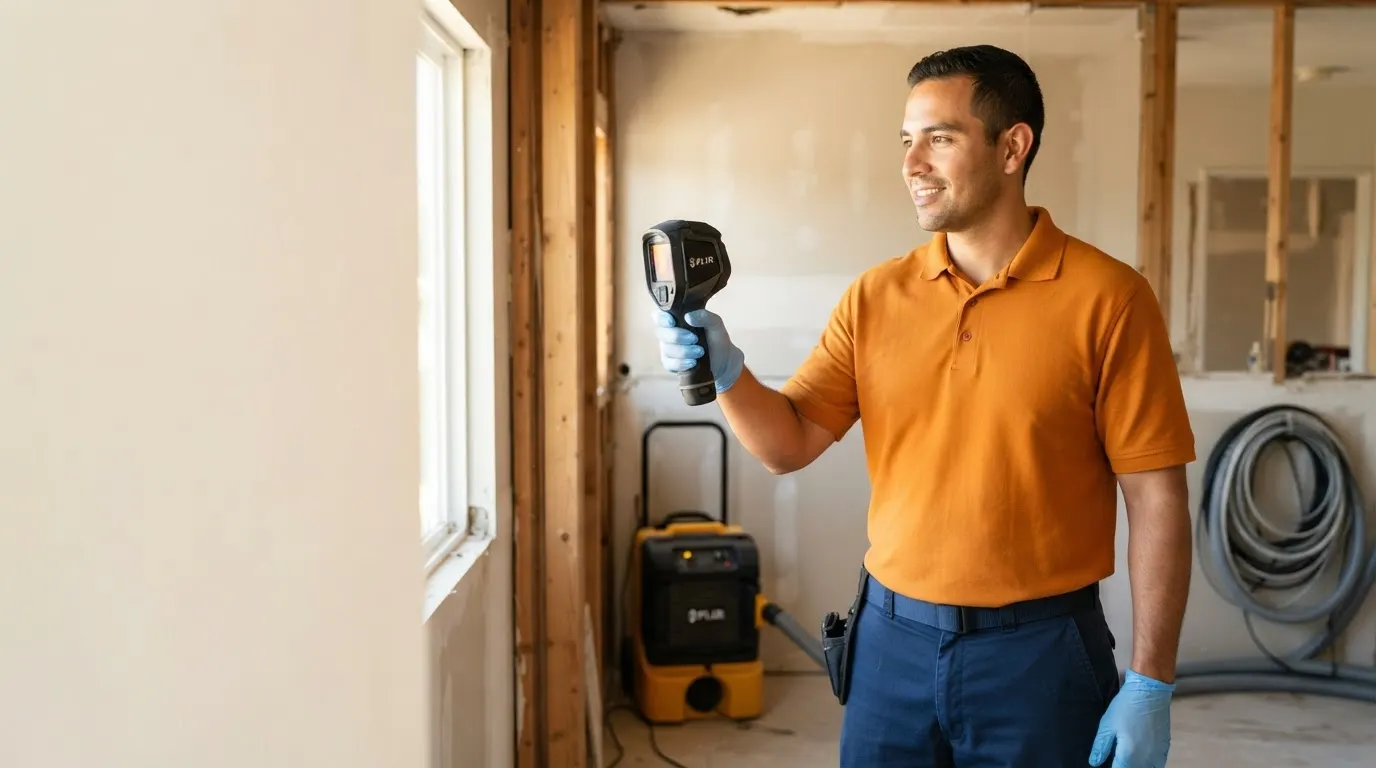
Fire damage restoration in Los Angeles is an emergency engineering and remediation protocol that systematically stabilizes burned building assemblies, extracts municipal firefighting water, strips corrosive chemical soot deposits, purges volatile combustion gases, and documents material losses for commercial and residential property insurance settlements.
Every service reflects the same meticulous attention to detail, whether it's a single job or a larger fire damage restoration project across los angeles.
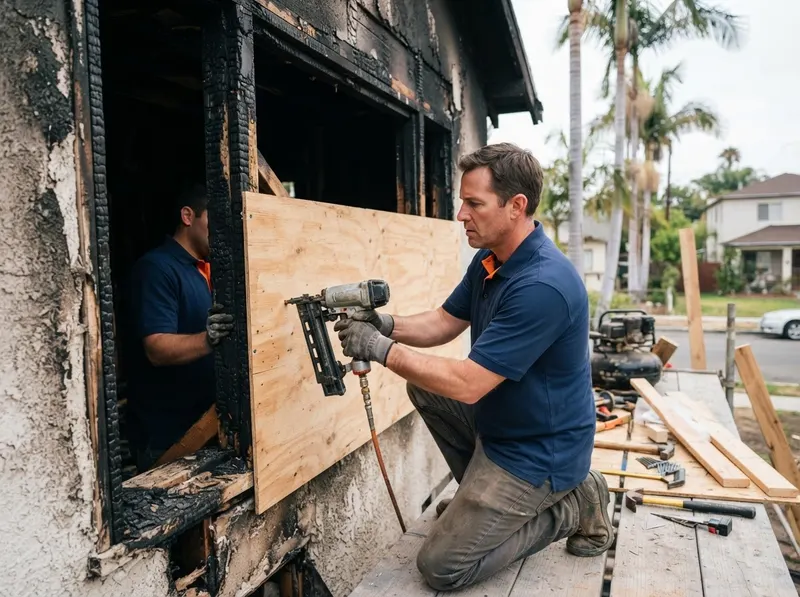
Securing compromised structural framing, broken window apertures, breached entry doors, and collapsed roof trusses immediately after municipal fire officials release the perimeter. Technicians utilize two-by-four and four-by-four dimensional Doug-fir lumber to construct structural false-work, temporary exterior lintels, and heavy header supports that prevent progressive structural failure. Crews fasten half-inch CDX exterior-grade plywood panels directly over all open exterior wall punctures using corrosion-resistant structural screws. Heavy 12-mil woven polyethylene tarps are battened across damaged roofing rafters and ridge caps to prevent wind-driven marine rain intrusion, urban particulate infiltration, and unauthorized access across vulnerable properties.
Get a quote →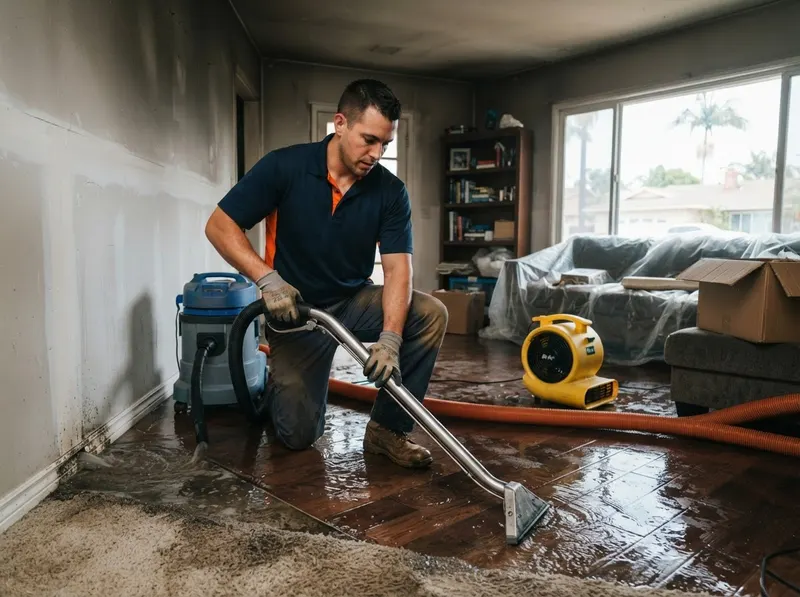
Removing high-volume standing municipal water deposits introduced by high-pressure firefighting hose streams and interior fire sprinkler system discharges. High-volume truck-mounted extraction vacuums and submersible sump pumps purge standing water from crawl spaces, slab recesses, and submerged subflooring systems before structural saturation can cause timber rot. Technicians immediately deploy commercial low-grain refrigerant dehumidifiers alongside high-static centrifugal air movers producing over 3,000 cubic feet per minute of directional airflow. Continuous psychrometric moisture mapping with non-invasive radio frequency meters and penetrating pin probes isolates deep wall cavity dampness, drying structural sill plates and base plates to below 15% wood moisture equivalent within 72 to 96 hours.
Get a quote →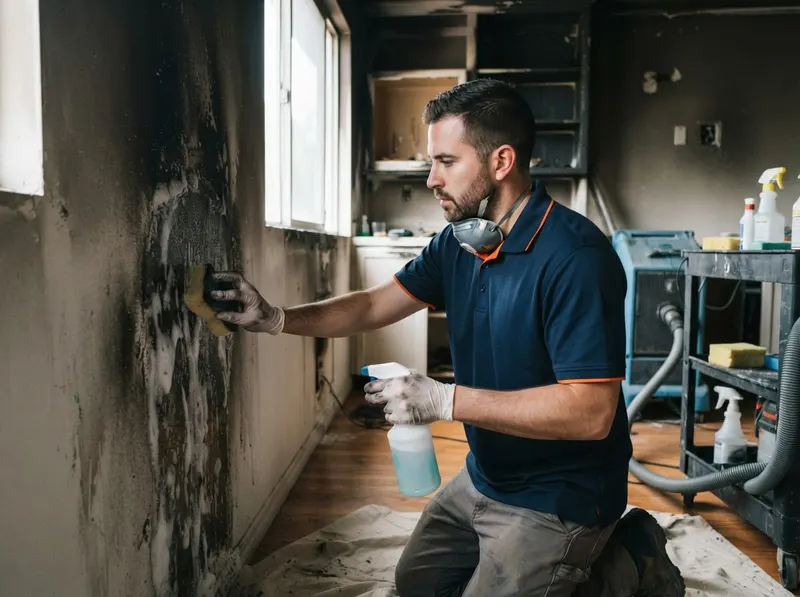
Decontaminating persistent chemical deposits resulting from high-temperature electrical burnouts, plastic housing degradation, and low-temperature kitchen grease fires. Low-temperature organic cooking combustion leaves an oily, amber-colored protein soot that discolors architectural enamels, cabinet finishes, and textured drywall assemblies, demanding alkaline aqueous degreasers and enzymatic neutralizers to dissolve the bonded lipid films. Burning synthetic electrical wiring, carpet fibers, and foam padding generates dense black carbon soot containing hydrochloric acid vapors. Technicians employ vulcanized rubber dry-chem sponges, ultrasonic immersion dip tanks, and specialized water-soluble chemical surfactants to capture ionized soot films from architectural glass, marble countertops, and electrical switchplates before irreversible chemical pitting occurs.
Get a quote →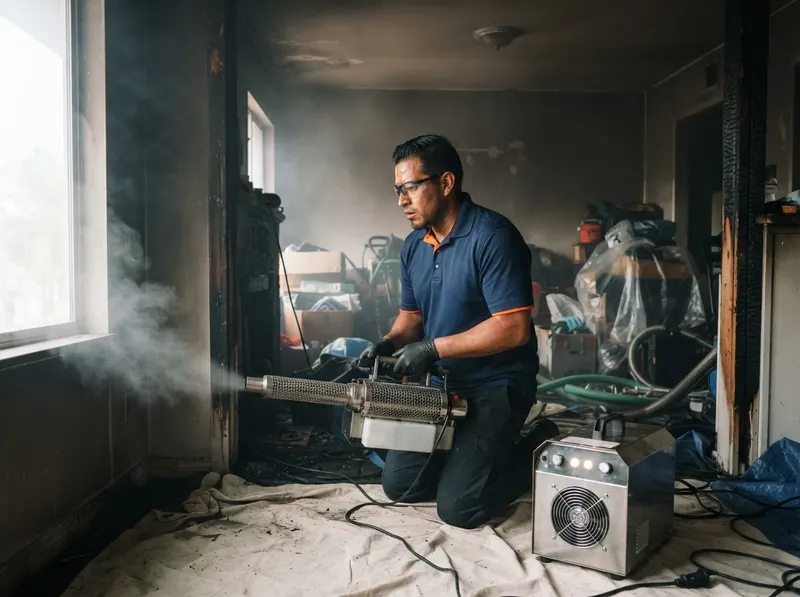
Decontaminating deep structural framing odors caused by microscopic volatile organic compounds trapped within structural materials. Thermal foggers heat petroleum-based neutralizing counter-odorants into an ultrafine aerosol mist with droplets measuring 0.5 to 2 microns in diameter, matching the identical physical expansion and penetration dynamics of the original combustion smoke. This aerosol drives deep into open wood grain, subfloor cracks, concrete porosity, and interstitial wall voids to neutralize trapped odor compounds at their source. High-volume mobile hydroxyl reactors generate reactive OH atmospheric radicals from ambient atmospheric moisture to systematically break down persistent polycyclic aromatic hydrocarbons into carbon dioxide and water molecules, completely avoiding toxic ozone off-gassing and artificial masking sprays.
Get a quote →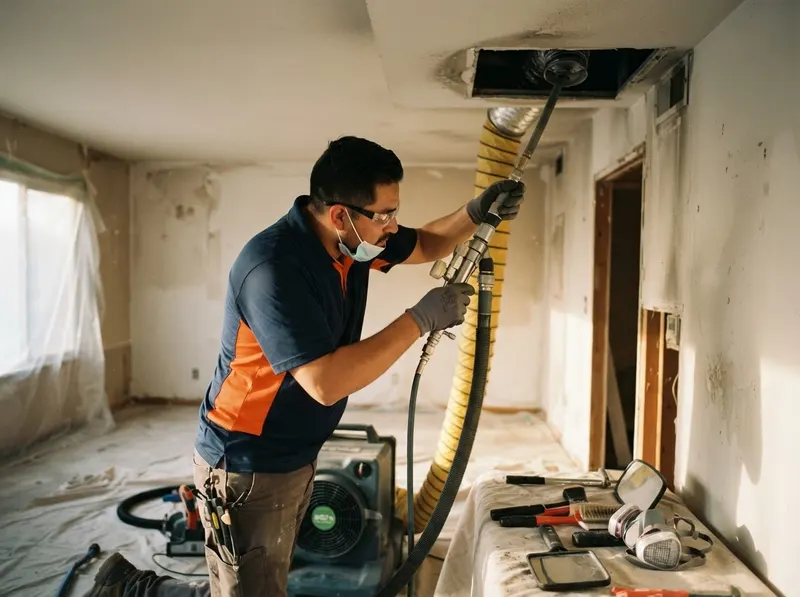
Restoring forced-air mechanical distribution systems, supply trunks, return plenums, and flexible distribution ductwork contaminated by circulating smoke particulates. Operating an uncleaned mechanical system following a fire disperses toxic carbon black and crystalline silica throughout previously unaffected living quarters. Certified remediation crews isolate the mechanical air handler, seal individual register boots with airtight protective plastic film, and hook up negative-air vacuum collectors moving 2,000 cubic feet per minute equipped with 99.97% HEPA filtration stages. Technicians mechanically dislodge interior duct wall debris using rotating agitation air whips, wash metal duct cavities with EPA-registered antimicrobial formulas, and fog non-porous duct linings with water-based polymer encapsulate sealers to permanently entrap microscopic soot residues.
Get a quote →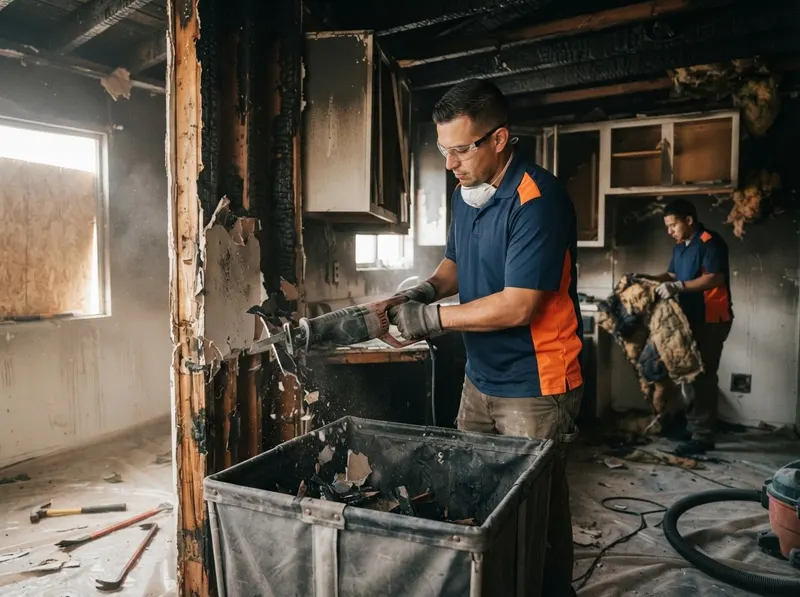
Removing severely burned, structurally compromised, or toxic non-salvageable architectural assemblies down to structurally sound framing timbers. Remediation crews systematically pull down charred gypsum wallboards, sagging drop-ceiling tiles, heat-delaminated insulation, scorched structural wood sheathing, and blistered interior lath-and-plaster layers. All material handling procedures follow stringent safety containment protocols: technicians isolate work zones with 6-mil flame-retardant poly sheeting and operate negative-air fans to prevent fine ash particles from escaping into adjacent rooms. Charred structural waste is sealed within heavy-duty 6-mil contractor sacks, staged in exterior roll-off containers, and hauled away according to regional environmental and construction debris disposal regulations.
Get a quote →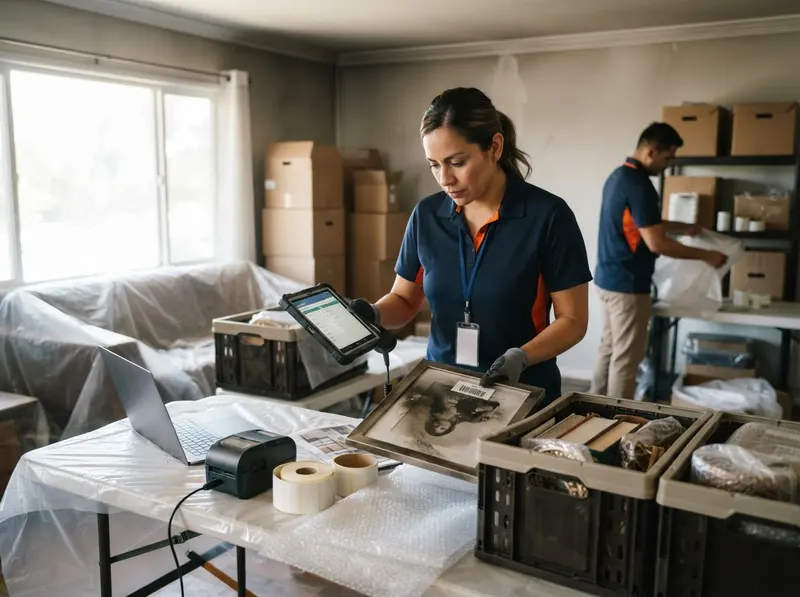
Systematically inventorying, packing, transporting, and deodorizing salvageable personal property, hard furnishings, and high-value textiles in an off-site climate-controlled facility. Field technicians catalog every item using barcoded digital scoping software that records pre-existing conditions, physical damage levels, and storage locations for insurance settlement files. Salvageable upholstery, window draperies, bedding, and delicate garments undergo specialized wet cleaning, high-efficiency particulate aspiration, and gentle solvent dry-cleaning processes designed to dissolve embedded smoke particles without fabric damage. High-value hard contents, metal fixtures, fine ceramics, and detached structural trim pass through multi-chamber ultrasonic cleaning systems, while valuable electronic components are disassembled and decontaminated of conductive carbon soot.
Get a quote →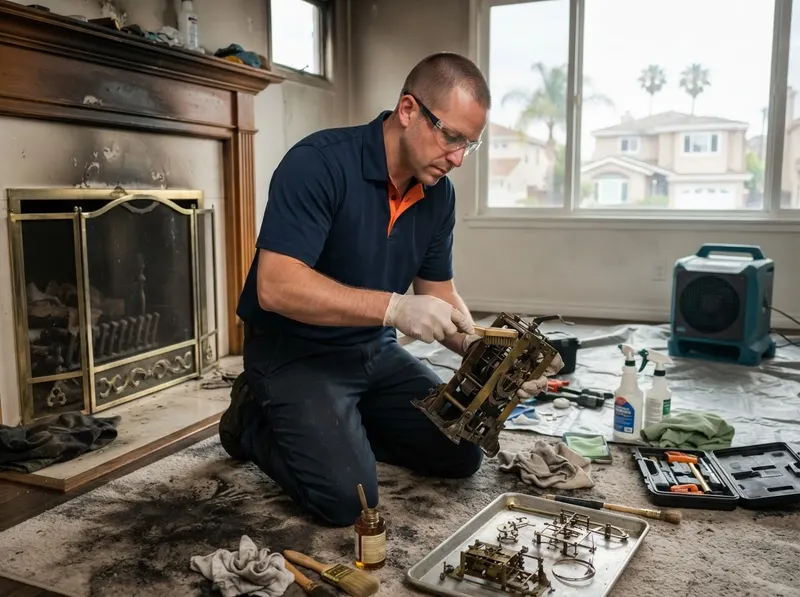
Arresting rapid chemical oxidation across copper plumbing supply lines, structural metal fasteners, electrical service panels, architectural hardware, and stainless steel kitchen fixtures. Smoke deposits produced by burned PVC conduit, vinyl flooring, and household plastics release active chloride and hydrogen chloride gas that combine with firefighting humidity to form dilute hydrochloric acid. Within hours of ignition, this acid aggressively corrodes unprotected metal surfaces, forming copper patinas, rust bloom, and dull oxidation pitting. Technicians arrest corrosion by immediately applying neutralizing alkaline washes to affected metal profiles, followed by micro-abrasive polishing pastes and thin-film anti-corrosion barrier coatings that preserve mechanical operational integrity.
Get a quote →You get a firm, itemized quote for your fire damage restoration before any work begins, no surprises, no pressure.
Careful prep, tidy work, and a full cleanup when we are done. We treat your home and belongings like our own.
The same trusted, background-checked team from the first call to the final check.
Selecting the correct structural recovery protocol depends on three technical variables: combustion temperature, material fuel sources, and the volume of municipal suppression water applied. When a blaze is confined to a single domestic compartment, such as a localized stovetop grease fire, the primary contaminant is an oily, highly adhesive protein film rather than mass dimensional lumber failure. In this scenario, deploying targeted chemical emulsion wiping paired with localized vaporized thermal counter-odorants restores painted gypsum substrates without requiring invasive wall demolition.
Conversely, when fire penetrates the roof diaphragm or degrades primary second-story floor joists, technicians must immediately erect heavy dimensional lumber false-work, crane-guided exterior weather enclosures, and negative-pressure HEPA filtration containment zones before any particulate remediation begins. The critical trade-off is remediation velocity versus physical structural intervention. Relying strictly on surface chemical washing saves capital and preserves existing drywall envelopes, but attempting surface restoration when volatile smoke residues have driven deep into unsealed stud cavities causes recurring off-gassing whenever seasonal ambient humidity climbs, ultimately forcing an expensive teardown months later.
Furthermore, if high-pressure municipal hose lines from responding engine companies leave subflooring and bottom sill plates saturated beyond twenty percent wood moisture equivalent, prioritizing soot cleaning over high-volume desiccant moisture reduction leads to structural mold outbreaks within 48 hours. When structural elements burn at low temperatures with limited oxygen, such as smoldering upholstery or wiring inside enclosed conduit, acidic particulates coat all horizontal planes. 3 microns, leaving microscopic gaseous sulfur and chloride compounds bonded deep within architectural substrate surfaces.
Every project gets a firm, written price after a free on-site visit. Ranges below for orientation.
Tell us about your fire damage restoration job and we'll send a clear, written quote, usually the same day. Or just call and talk to a real los angeles pro.
(657) 530-4048
Structural fire damage dynamics across the Los Angeles basin vary significantly based on hyper-local topography, local microclimates, and regional architecture. Properties situated along the wildland-urban interface in Pacific Palisades, Brentwood, Porter Ranch, and Woodland Hills face severe wildland-urban fire behavior driven by seasonal Santa Ana wind conditions, which propel fine desert sand, embers, and dry air at velocities exceeding 50 miles per hour through mountain passes. These wind-driven exterior events blast abrasive ash through soffit vents and attic apertures, requiring specialized reverse-pressure particulate extraction inside roof assemblies even when direct flame contact is avoided. Conversely, historic structural stock found throughout Los Feliz, Silver Lake, and Highland Park frequently features century-old California Craftsman and Spanish Colonial Revival architecture built with dense old-growth Douglas-fir framing, wire-backed lath-and-plaster walls, and unreinforced clay brick chimneys. Remediating soot in these older lath-and-plaster homes requires dry chemical cleaning methods and negative-pressure extraction to avoid saturating horsehair binders or collapsing fragile, brittle plaster keys. Furthermore, hillside residential properties in Mount Washington and Studio City present acute logistical constraints, such as narrow switchback access roads like Lookout Mountain Avenue or narrow sections of Mulholland Drive that restrict standard 30-foot restoration trailers. Crews in these steep environments must stage high-pressure commercial pumping rigs and mobile power generation units downhill, using extended 200-foot hose runs while maintaining structural stability monitoring along exterior foundation piers during high-volume water extraction.
Free estimates for los angeles & the surrounding area.
 Top Fire Damage Restoration