Executing controlled demolition after a structure fire differs fundamentally from unselective bulk clearing. Heavy-equipment wrecking can destabilize connected foundation plates, spread pressurized soot deeper into…
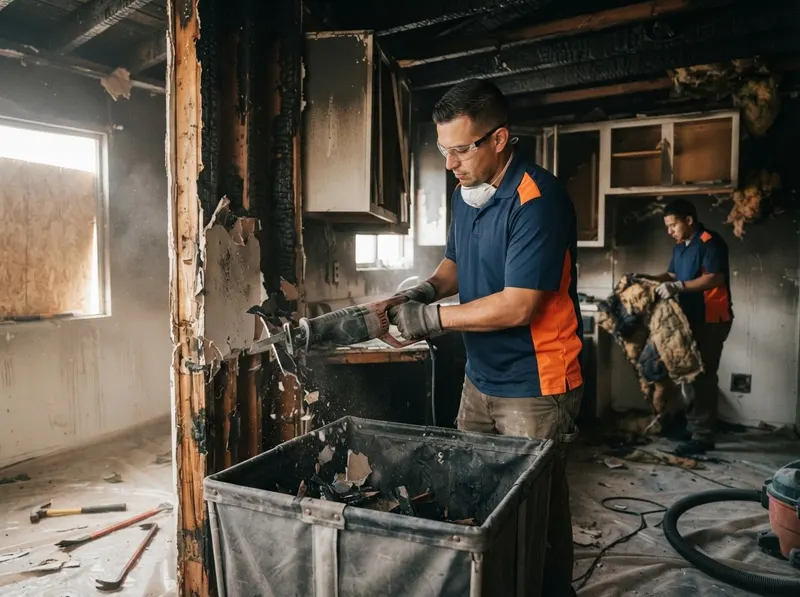
Executing controlled demolition after a structure fire differs fundamentally from unselective bulk clearing. Heavy-equipment wrecking can destabilize connected foundation plates, spread pressurized soot deeper into clean cavities, or drop compromised trusses onto unaffected subfloors. Instead, mechanical crews establish negative-air scrubbers and physical poly-containment barriers before using selective hand-felling, shoring posts, and targeted cutting tools. This method isolates charred timber, failed roofing systems, and collapsed drywall ceilings while protecting sound engineering infrastructure. Property owners in hillside neighborhoods like Silver Lake, Mount Washington, and Pacific Palisades frequently navigate narrow streets and steep slopes where heavy equipment access is limited, requiring staged hand-carry removal to preserve hillside retaining walls and nearby property lines.
Fire suppression efforts leave behind tens of thousands of gallons of municipal water mixed with toxic dry and wet soot. In valley communities such as Encino, Woodland Hills, and Porter Ranch, intense summer heat causes trapped suppression moisture beneath burned insulation to develop microbial growth inside 48 hours. Controlled demolition strips away these saturated, contaminated thermal barriers down to solid framing. Technicians systematically map moisture, catalog salvageable framing, and separate hazardous household waste from standard construction debris. Every load adheres strictly to Southern California waste management regulations, diverting non-contaminated metals and concrete when possible while manifesting hazardous soot residues for specialized treatment facility disposal.
Navigating the aftermath of a structural fire requires systematic administrative precision alongside physical extraction. The process follows four distinct steps: 1. Structural assessment and engineering review to establish load paths, support columns, and lateral stability. 2. Implementation of temporary shoring jacks and containment air barriers under Los Angeles Department of Building and Safety (LADBS) oversight. 3. Surgical dismantling of unrecoverable surfaces, hazardous material sorting, and line-item photo documentation for carrier adjusters. 4. HEPA-filtered vacuuming, pressure-washing of sub-slabs where appropriate, and preparation of the clear framing envelope for reconstruction.
Every job gets a firm, written price after a free on-site visit.
Tell us about your controlled structural demolition & controlled debris removal job in los angeles and we'll send a clear, written quote, usually the same day.
 Top Fire Damage Restoration