When synthetic materials, plastics, and chlorinated compounds burn during a structure fire, combustion generates hydrogen chloride and sulfur dioxide gases. Upon encountering ambient moisture, these gases synthesize…
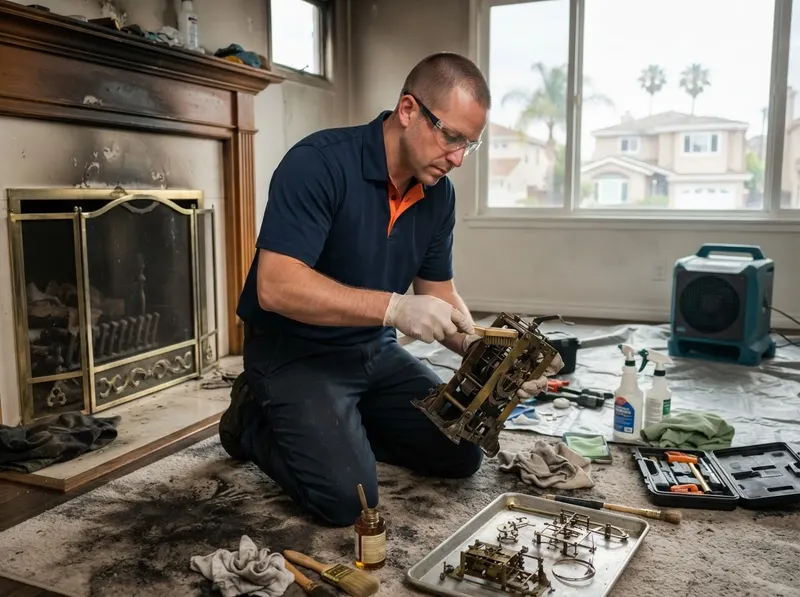
When synthetic materials, plastics, and chlorinated compounds burn during a structure fire, combustion generates hydrogen chloride and sulfur dioxide gases. Upon encountering ambient moisture, these gases synthesize into active hydrochloric and sulfurous acids that collect on unpainted or finished metallic fixtures. In Los Angeles County, this process accelerates rapidly. Coastal microclimates stretching from Pacific Palisades to Brentwood frequently sustain nocturnal relative humidity levels exceeding 75%, creating an aggressive electrolytic cell on metal surfaces. Farther inland, the intense thermal conditions of the San Fernando Valley, affecting areas such as Woodland Hills, Encino, and Porter Ranch, drive rapid chemical reactions into architectural brass, bronze, polished chrome, and cold-rolled structural steel.
Immediate preservation follows a strict chemical workflow. Technicians apply alkaline neutralizing emulsions directly to affected fixtures to elevate surface pH from destructive levels (often pH 2 to 3) toward a stable, neutral pH 7.0 to 7.5. Loose particulate soot is lifted using specialized HEPA-filtered vacuum systems operating at 99.97% particulate capture efficiency down to 0.3 microns, paired with dry chemical sponges to avoid forcing acidic grit into delicate gearings or escutcheon plates. Where suppression efforts from municipal crews have introduced hundreds of gallons of water, ambient dehumidifiers bring local relative humidity down below 40%, the established threshold below which active galvanic and atmospheric corrosion ceases.
Decision guidance dictates whether architectural hardware undergoes in-situ chemical stabilization or total shop-level restoration. In vintage hillside homes found in Los Feliz, Silver Lake, and Mount Washington, early 20th-century mortise locksets, hammered copper accents, and unlacquered brass strap hinges represent high replacement costs or irremediable architectural loss. If localized acid etching measures less than 0.002 inches deep, in-situ neutralization followed by solvent cleaning, micro-abrasive polishing, and a protective microcrystalline wax barrier preserves the original alloy. Conversely, if high-heat oxidation has caused base-metal recrystallization or blistering on zinc die-cast cabinet handles in Studio City, stabilization prevents transfer staining to surrounding millwork, while replacement hardware is inventoried for property insurance verification.
Corrosion mitigation functions distinct from routine surface wipe-downs. Standard domestic cleaners often contain water or ammonia, which reactive soot turns into further corrosive agents. Mechanical preservation isolates unaffected structural components, such as seismic hold-downs, exposed load-bearing bolts, and main electrical breaker buses, protecting them against irreversible loss of section thickness. Documenting post-fire oxidation rates with dry-film thickness gauges and pH test paper confirms that neutralization is mathematically complete before finish coats, paints, or rebuilding efforts proceed.
Every job gets a firm, written price after a free on-site visit.
Tell us about your corrosion mitigation & metal hardware preservation job in los angeles and we'll send a clear, written quote, usually the same day.
 Top Fire Damage Restoration