Suppressing a residential fire typically introduces between 1,500 and 3,000 gallons of high-pressure hose water into a building envelope. In multi-level hillside residences across Silver Lake, Mount Washington, and…
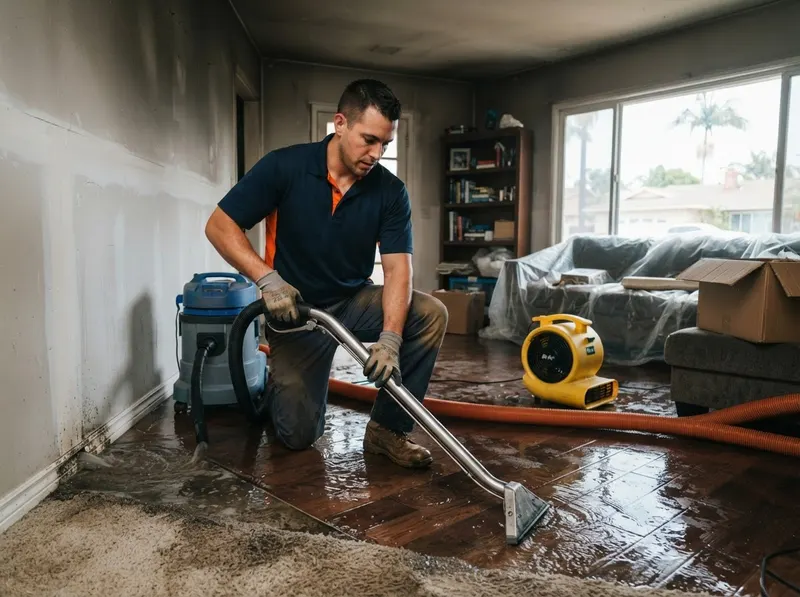
Suppressing a residential fire typically introduces between 1,500 and 3,000 gallons of high-pressure hose water into a building envelope. In multi-level hillside residences across Silver Lake, Mount Washington, and Pacific Palisades, this suppression runoff pools inside lower crawlspaces and foundation footings, mixing with ash, soot, and chemical fire retardants. This creates Category 3 contaminated water that accelerates wood framing rot and delaminates plywood within 48 hours. Firefighting water extraction differs fundamentally from standard pipe-burst remediation because structural framing is already compromised by thermal degradation, requiring precise load assessment before heavy extraction machinery is placed on joists.
Technicians follow standard protocol IICRC S500 and S520 guidelines, deploying FLIR thermal imaging cameras and penetrative pin-type moisture meters to map moisture paths hidden behind undamaged lath and plaster in older homes in Los Feliz and Highland Park. Controlled drying requires balancing specific humidity ratios: LGR (low-grain refrigerant) dehumidifiers drop the relative humidity below 30%, drawing trapped water out of deep structural Douglas fir studs in Woodland Hills, Encino, and Studio City basements without splitting heat-stressed timber. If soot-laden water sits longer than 48 hours in warm San Fernando Valley microclimates like Porter Ranch, airborne mold spores colonize porous building assemblies, drastically compounding rebuild timelines.
1. Deep standing water is pumped out using high-volume submersible pumps and heavy-duty weighted extraction units directly to permitted municipal drainage lines.
2. Saturated drywall, wet ceiling tiles, and blown-in fiberglass insulation that hold moisture against structural studs are cut away in clean 2-foot or 4-foot flood cuts.
3. Technicians establish negative-air containment using HEPA air filtration units rated at 99.97% particulate capture to prevent soot cross-contamination.
4. High-velocity centrifugal air movers and desiccant dehumidifiers are placed at calculated angles to pull moisture out of structural plates and subflooring.
5. Daily moisture-log readings monitor dry-standard targets (typically 10% to 12% wood moisture equivalent) until drying goals are verified and documented for insurance carriers.
Every job gets a firm, written price after a free on-site visit.
Tell us about your firefighting water extraction & structural drying job in los angeles and we'll send a clear, written quote, usually the same day.
 Top Fire Damage Restoration